You make a normal business call.
The customer doesn’t answer. So, you do what any professional would do — you call them back.
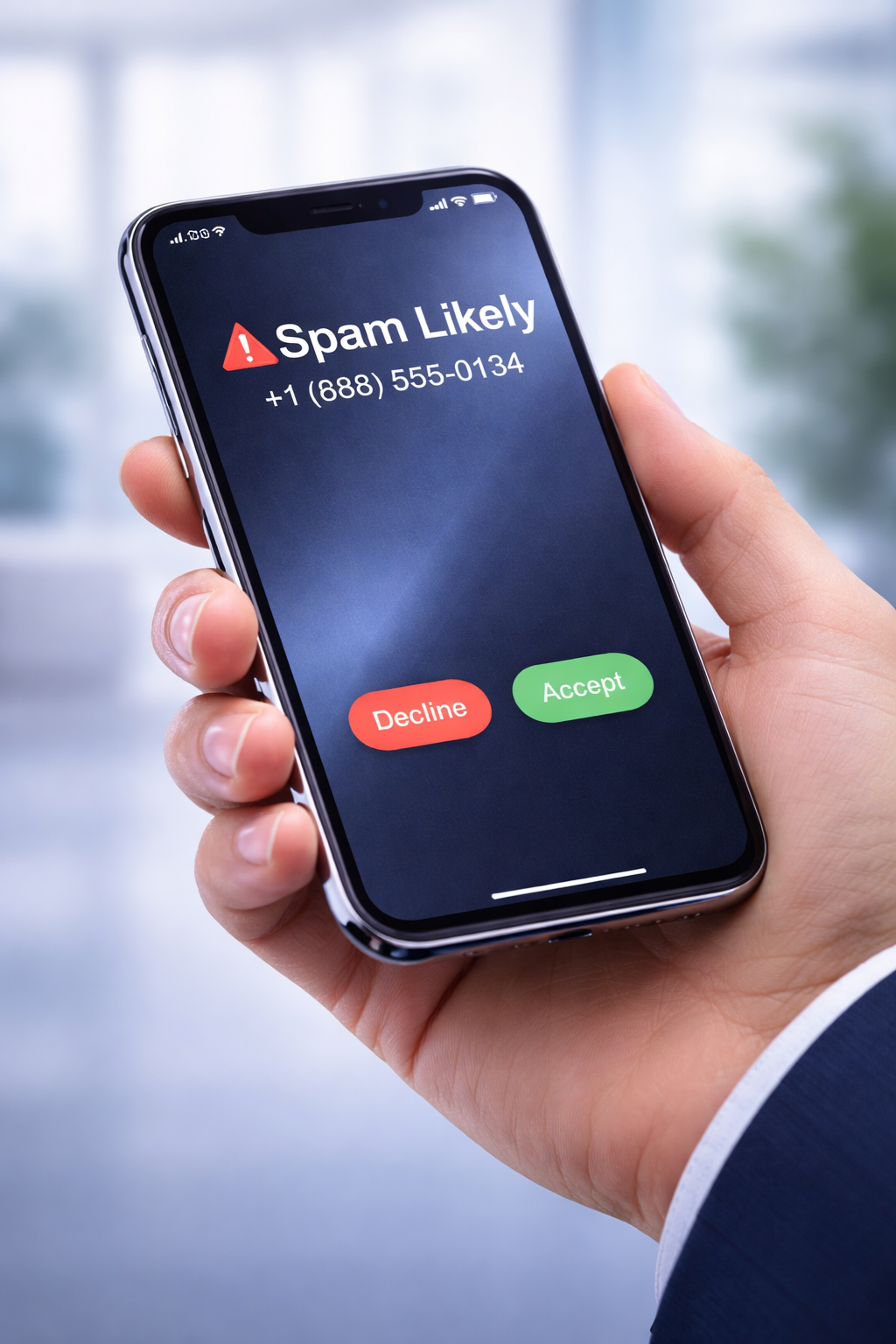
But the next time your number hits their phone, it shows up as “Spam Likely.”
Now the customer won’t answer at all.
And the worst part? Most businesses don’t even realize it’s happening.
“Spam Likely” is a label phone carriers apply when automated systems detect calling patterns or user reports that resemble robocalls or unwanted calls.
This is why legitimate business calls sometimes show “Spam Likely” on a customer’s phone.
And, once a number is flagged, it can affect every call you make.
How Legitimate Calls Get Flagged
Carrier spam filtering systems rely heavily on calling patterns and user reports. If a number places several calls in a short period of time, repeatedly calls the same number, or receives even a single spam report, carrier algorithms may flag that number as suspicious.
Trigger examples include:
At that point, it can start to feel like a game of two truths and a lie, where normal business behavior begins to look suspicious to automated systems.
When flagged, your number may appear as “Spam Likely”, “Scam Risk”, or may be blocked entirely.
The Impact on Businesses
When a legitimate business number is labeled “Spam Likely,” the consequences are immediate:
Many businesses don’t realize it’s happening at first. They simply assume customers are busy, unavailable, or quietly ignoring their calls.
“The irony is that we’re usually calling people who already want to talk to us. But if their phone labels the call as spam, we’ve lost their trust before we even get the chance to help.”
- Diamond Voice Lead Support Technician
The Balance Carriers Have to Manage
Today’s networks face enormous pressure to protect customers from the surge of robocalls and scam activity over the past decade. Filtering systems were built to help consumers identify suspicious calls and avoid unwanted ones.
Yet when legitimate calls are mislabeled or blocked, real conversations between businesses and customers get disrupted.
Finding the right balance isn’t easy. But the goal should be simple: block the right calls.
When Robocall Rules Backfire
The TRACED Act (Telephone Robocall Abuse Criminal Enforcement and Deterrence Act) is a U.S. law passed in 2019 to combat illegal robocalls and caller ID spoofing. It requires phone carriers to implement authentication technologies like STIR/SHAKEN, which help verify that calls come from legitimate numbers and strengthen enforcement against robocall scams.
The goal is important: protecting consumers from the overwhelming volume of fraudulent calls.
However, the rapid rollout of automated filtering systems has created unintended consequences for legitimate businesses.
These businesses aren’t trying to bypass protections—they’re simply trying to return missed calls, confirm appointments, or follow up on requests. Instead, many now find themselves navigating authentication standards and call-filtering rules just to complete what used to be a perfectly ordinary phone call.
What To Do If Your Number Shows “Spam Likely”
If your number has been flagged “Spam Likely,” there are several steps you can take to address the issue.
Verify Your Caller Identity
Carriers increasingly rely on systems that confirm calls come from legitimate sources. Make sure your phone provider supports STIR/SHAKEN caller authentication, an industry standard that verifies calls originate from valid numbers and are not spoofed.
Register Your Business Numbers
Businesses can register their numbers in databases that carriers use to identify legitimate callers. One widely used option is the Free Caller Registry:
https://freecallerregistry.com
Submitting your business information helps carriers and analytics providers recognize legitimate callers.
Submit a Carrier Appeal
If your number is already labeled “Spam Likely,” you can request a review through the carrier’s appeal process. You will typically need to provide:
Prevention Is Easier Than Repair
The best way to avoid Spam Likely labeling is to monitor and manage your outbound calling patterns.
Carrier spam filtering isn’t going away.
But with the right setup and awareness, businesses can reduce the risk of legitimate calls being mistaken for spam.
If customers can’t answer your calls, the rest of the conversation never happens—and in today’s environment, protecting your caller reputation matters just as much as protecting your online presence.
At Diamond Voice, helping businesses navigate the evolving world of carrier spam filtering is part of what we do every day. From caller authentication and reputation management to guidance on carrier appeals, our team works to help legitimate businesses keep their calls reaching the people they’re trying to serve.
When your customers expect to hear from you, your calls should actually get through.
If you're considering VoIP for your home or office, Contact Us for an Evaluation and Quote. With the right setup, you can enhance your calling experience, improve operational efficiency, and embrace the unprecedented flexibility that VoIP provides. Remember, the future of communication is now. Embracing this change means positioning yourself ahead of the game in innovative and cost-effective communication strategies.